
A Guide to Crowd Management Strategies for Festival Organizers Facing Security Staffing Shortages to Improve Event Safety
Introduction
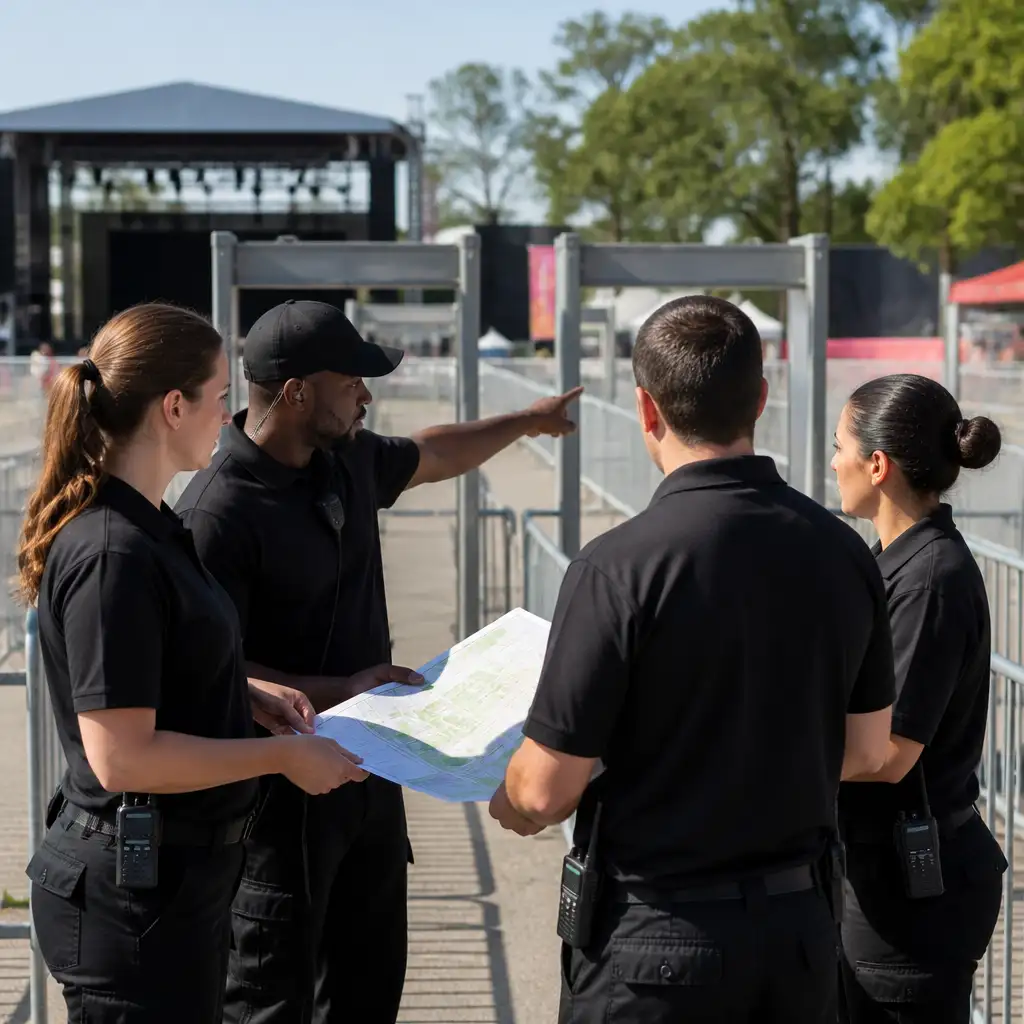
Large public gatherings such as festivals present persistent safety and operational challenges, and those challenges become acute when dedicated security staffing is limited. Festival organizers must balance attendee experience with participant safety, while operating under constrained budgets and workforce shortages. When security teams are thin, gaps in access control, entry screening, crowd flow, and emergency response can increase organizational risk and liability.
This guide addresses those risks with practical, actionable strategies that help festival organizers maintain safe crowd flow and readiness for emergencies even when professional security staffing is reduced. The recommendations focus on planning, resource prioritization, and scalable tactics you can implement in advance to reduce incidents and improve outcomes.
Who should use this guide? Event directors, venue operators, operations managers, volunteer coordinators, and security leaders tasked with creating safe, compliant, and resilient event environments. The strategies below emphasize prevention, clear roles, and measurable procedures that complement professional services and support informed decision-making.
Assessing gaps and prioritizing risks
Before reallocating scarce resources, conduct a focused risk assessment that identifies the hazards most likely to affect attendee safety and event continuity. A concise, prioritized assessment lets organizers direct limited staffing where it matters most—crowd pinch points, ingress/egress routes, medical touchpoints, and high-traffic concessions or stages.
A rapid event risk checklist should include: estimated peak attendance by zone, entry and exit counts, nearest medical services, potential access-control vulnerabilities, and local transportation pinch points. Use that data to create a prioritized action list linking risks to mitigation steps and minimum staffing levels.
When professional security options are limited, pair the assessment with scalable mitigation measures and consider contracting supplemental event support. Professional partners can advise on refined crowd models and provide targeted services; for festival organizers researching options, consider comparing offers for specialized event security services that focus on crowd management and emergency coordination.
Phased staffing models and hybrid workforces
Phased staffing matches staff levels and skill sets to the event timeline. Instead of maintaining full staffing throughout, assign staff in higher concentration during predictable peak times (headliner performances, scheduled egress windows, or opening/closing times). A phased model reduces total hours worked while preserving capacity where risk is highest.
Key elements of a phased approach:
- Define peak periods by hour and venue zone using historical data or ticketing timelines.
- Assign core, highly trained personnel to critical control points (medical, command post, main entry/exit) during peaks.
- Use lighter roving coverage during low-risk periods with rapid-response triggers to escalate as needed.
Hybrid workforces combine professional security staff with trained volunteers, venue staff, licensed contractors, and technology-based monitoring. When integrating hybrid teams, keep roles simple, well-documented, and limited in scope so that volunteers and non-security staff operate within clear boundaries and escalation paths.
Volunteer integration: selection, training, and supervision
Volunteers can expand capacity when selected and managed correctly. A structured volunteer program mitigates risks and improves reliability. Critical controls include screening, role clarity, short focused training, visible identification, and direct supervision by experienced staff.
Volunteer program essentials:
- Selection: brief background check, references, and clear expectations about tasks and limits.
- Training: concise, role-specific sessions on crowd-flow basics, reporting procedures, spotting medical and behavioral concerns, and radio etiquette. Pair training with certified security training modules where possible for supervisors and key staff.
- Supervision: each small team of volunteers should have a designated trained supervisor or lead with decision authority and direct radio contact with the incident command post.
- Accountability: check-in/check-out processes, shift logs, and simple incident reporting forms.
Sample 4-hour volunteer shift training outline:
- 0:00–0:15 — Orientation, ID and radios
- 0:15–0:45 — Crowd-flow basics and safe positioning
- 0:45–1:15 — Recognizing medical vs. behavioral incidents
- 1:15–1:45 — Communication protocols and escalation steps
- 1:45–2:00 — Break and Q&A; role assignments and site map review
Technology aids for crowd flow and situational awareness
Technology does not replace human judgment, but it amplifies limited teams by providing data and communications that improve situational awareness. When staffing is short, deploy technology targeted at decision-support and early detection to reduce dependence on sight-lines alone.
Effective technology investments for understaffed events include:
- Temporary CCTV with remote monitoring and basic crowd-density analytics—assign a single operator to flag concerns.
- Digital queueing and ticket-scanning to reduce choke points at entry gates.
- Real-time public-address and digital signage to direct attendees and de-escalate congestion.
- Incident-reporting apps or simple digital forms that allow volunteers and vendors to submit photos and location-stamped alerts to the command post.
When integrating technology, establish clear protocols for who monitors feeds, response thresholds for alerts, and redundant communication paths. For organizations seeking expert guidance on integrating technology with field operations, The Hemingway Group provides context-specific security consulting and planning services tailored to event needs.
Vendor coordination and site logistics: templates and tips
Vendors influence crowd behavior through placement, service speed, and queue management. Proper vendor coordination reduces friction and limits opportunities for crowding. Use contractual expectations and operational templates to ensure vendors support crowd-management goals.
Vendor coordination tips:
- Map vendor locations against projected pedestrian flows and avoid placing high-demand vendors near narrow egress routes.
- Require vendors to provide staffing plans that include cashless payment and sufficient point-of-sale terminals to limit queue time.
- Coordinate delivery windows and backstage access to prevent service vehicles from interfering with public routes.
- Provide vendors with a short vendor operational brief that includes emergency exits, nearest medical point, and the volunteer/supervisor contact list.
Vendor coordination template (brief):
| Item | Vendor Requirement |
|---|---|
| Service hours | Specify start/stop times and peak service expectations |
| Queue management | Provide staffing ratio to expected customers; use stanchions where needed |
| Emergency role | Know nearest medic point and relay incidents to command post immediately |
| Delivery plan | Stagger deliveries; use service lanes away from main pedestrian flows |
Contingency planning and escalation procedures
A simple, rehearsed contingency plan gives understaffed events a predictable path from detection to resolution. Focus on a limited set of likely scenarios—medical events, severe weather, mass egress, and disruptive behavior—and document clear escalation thresholds tied to roles and communications.
Escalation procedure template (use as a one-page reference):
- Step 1 — Identify: Staff or volunteer reports incident via radio/app with location and severity (1–5 scale).
- Step 2 — Contain: On-site lead secures immediate area, redirects flow, and prevents overcrowding. If staffing limited, use signage and PA to redirect crowds.
- Step 3 — Notify: Command post receives incident, assigns nearest trained responder or calls medical/EMS.
- Step 4 — Escalate: If incident exceeds local capability (severity 4–5), notify local emergency services and implement evacuation or shelter-in-place as per plan.
- Step 5 — Record: Complete incident report with time, actions taken, personnel involved, and follow-up items.
Evacuation and shelter-in-place plans should be zone-based and communicate specific routes and assembly points. Keep instructions simple and widely posted. Where possible, conduct a short tabletop drill with leads the day before the event to validate communications and response roles.
As part of contingency planning, a proactive risk assessments engagement can identify site-specific vulnerabilities and prioritize mitigations before staffing decisions are finalized.
Frequently Asked Questions
Q: How can festival organizers maintain crowd safety when professional security hires are constrained?
A: Start with a focused risk assessment, use phased staffing to concentrate professionals during peak windows, integrate trained volunteers under direct supervision, and leverage targeted technology (CCTV, queueing systems, PA) to extend limited staff reach. Prioritize staffing at critical control points—medical, main ingress/egress, and command post.
Q: What training is essential for volunteers who support crowd management?
A: Short, role-specific training is most effective: identification and reporting of medical vs. behavioral incidents, basic crowd-flow awareness, radio and escalation protocols, and boundaries on intervention. Supplement with brief drills and clear supervisor assignment. When available, provide supervisors with certified-level instruction for decision-making and incident management.
Q: When should an organizer call local emergency services versus handling an issue internally?
A: Establish clear thresholds in your escalation template. Call local emergency services immediately for severe medical events, suspected weapons, active violence, or structural failures. For non-life-threatening incidents—minor medical aid, small altercations—use on-site trained responders while documenting and escalating if the situation worsens. Pre-event coordination with local EMS and law enforcement improves response times and clarity on handover procedures.
Large gatherings present unique public-safety challenges. The Hemingway Group provides guidance on crowd management, access control, emergency planning, and event preparedness to help organizers reduce risk and improve attendee safety.