
How Conference Planners Can Improve Emergency Response Planning for Large-Scale Evacuations to Reduce Liability Exposure
Introduction
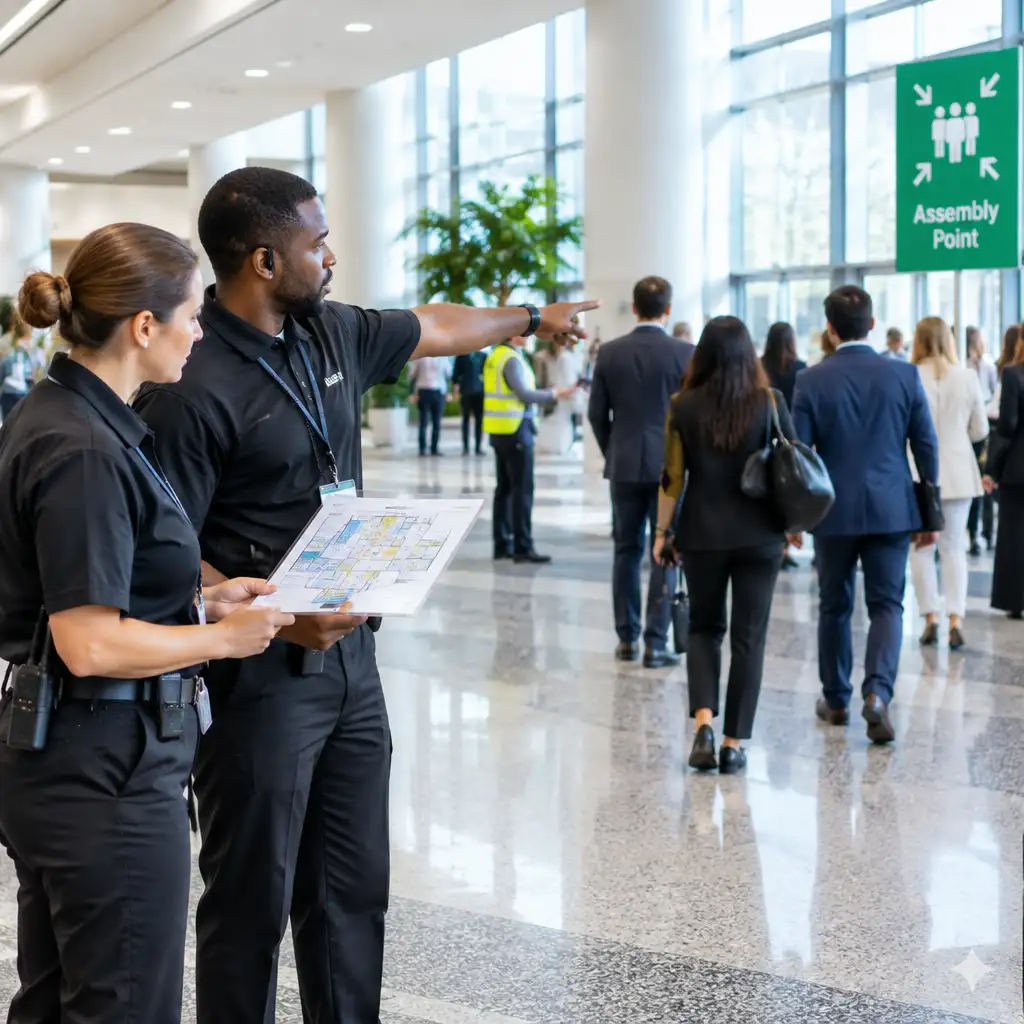
Large conferences and conventions present meaningful organizational risk when unplanned incidents require rapid, large-scale evacuation. Whether triggered by severe weather, a structural failure, an active-threat report, or a medical mass-casualty event, failures in planning and coordination can put attendees, staff, vendors, and volunteers at risk—and expose event owners and planners to significant liability.
Conference planners, venue operators, and event security leaders must treat emergency response planning as a programmatic responsibility that combines site evaluation, crowd management, clear communication, multi-agency coordination, and rigorous documentation. Proper planning reduces the chance of injury, shortens response time, and strengthens legal defenses if an incident becomes subject to review.
This roadmap focuses on actionable steps conference planners can implement now: site risk assessments, crowd-management and evacuation procedures, communication protocols, coordination with local emergency services, and post-incident documentation and review. For event-specific security support, consider engaging professional event security services early in planning to align operational details with legal and safety priorities.
Conducting comprehensive site risk assessments
A thorough site risk assessment is the foundation of any evacuation plan. Walk the site with venue operations, safety officers, and event security representatives to identify hazards that could impede evacuation, and document mitigations. Focus on ingress/egress capacity, choke points, vertical evacuation paths, temporary structures, medical access, and adjacent hazards such as nearby roads or water features.
Use a standard checklist to ensure consistency across venues. A practical site-assessment template should include:
- Venue layout and floor plans with measured exit widths and stair/ramps capacity
- Primary and secondary evacuation routes and capacity calculations
- Locations of medical aid stations, AEDs, and fire suppression systems
- Access points for emergency vehicles, staging zones, and helicopter landing options (if applicable)
- Vendor and exhibit hall configurations that may create obstacles
- Accessibility considerations for attendees with mobility limitations and evacuation assistance plans
- Communication signal quality, backup power, and available public-address systems
After the assessment, convert findings into a prioritized mitigation plan with assigned owners and deadlines. Where uncertainties remain, schedule tabletop exercises to validate assumptions. If you need a formal review, professional risk assessments provide defensible documentation and practical recommendations.
Designing crowd management and evacuation procedures
Evacuation procedures must be realistic and account for the event profile: peak attendance, demographics, peaking periods, and special-needs populations. Design procedures that reduce bottlenecks and enable orderly movement from high-density areas to safe assembly points or off-site transport.
Key planning elements include:
- Sectoring: Divide the venue into clearly defined sectors with assigned sector managers and radio call signs.
- Entry/exit staging: Identify and mark primary and secondary exits; plan queuing to prevent cross-flows.
- Flow modeling: Estimate egress times using simple capacity math (exit width x flow rate) and validate against expected occupant load.
- Controlled egress vs. immediate evacuation: Define criteria for phased or full evacuations (e.g., localized fire vs. active-threat).
- Clear signage and wayfinding for attendees unfamiliar with the venue.
- Roles and responsibilities for on-site staff, security officers, ushers, and volunteers.
Staffing plans should align with crowd density and critical times. Use trained teams for choke-point control and routing, and equip supervisors with radios and laminated role checklists. Strengthen capability with certified security training for staff and volunteers so everyone understands expectations during an evacuation.
Developing clear communication protocols for emergencies
Communication failures are a common factor in avoidable harm and liability exposure. Create a multi-channel communications plan that reaches attendees, staff, vendors, media, and emergency services with clear, consistent messaging.
Essential communication components:
- Command structure: Define a single point of decision-making (incident commander) and a communications lead.
- Message templates: Pre-draft short, plain-language messages for likely scenarios—evacuation, shelter-in-place, medical emergency, severe weather.
- Channels: Use PA systems, digital signage, SMS/text alerts, event apps, staff radios, social media, and liaison officers to local media.
- Redundancy: Plan backups for power loss or cellular degradation (satellite phones, runners, strategically placed messengers).
- Language and accessibility: Provide messages in multiple languages and include visual cues for those with hearing impairments.
Sample SMS template for immediate evacuation: “Attention: Immediate building evacuation. Leave the facility via the nearest EXIT. Follow staff instructions to designated assembly areas. Do not use elevators.” Maintain a version history of templates and log all outgoing messages for post-incident review.
Coordinating effectively with local emergency services and stakeholders
Pre-incident coordination with police, fire, EMS, and local emergency management reduces confusion during an event. Early engagement allows agencies to establish expectations, resource needs, response thresholds, and staging areas.
Coordination best practices:
- Invite agency representatives to planning meetings and tabletop exercises well before the event.
- Share final site maps, attendee estimates, event schedules, and contact rosters at least 30 days prior.
- Establish written MOUs or letters of agreement for responsibilities such as scene control, traffic management, and reunification points.
- Identify on-site liaisons from each agency and ensure they have operational access, radios, and a dedicated staging location.
- Integrate the event into local emergency operations center (EOC) plans when appropriate and confirm notification pathways for mass-notification systems.
These relationships pay dividends when a rapid, multi-agency response is required. Document meetings, agreed actions, and response expectations in a coordination log so responsibilities are clear if liability questions arise later.
Documentation, training, and drills to reduce liability
Documenting planning and execution demonstrates due diligence. Create and retain records for site assessments, staffing plans, communications, training attendance, drill results, and after-action reports. Well-documented processes help show that the organization took reasonable steps to protect attendees.
Recommended documentation and training steps:
- Maintain a master emergency response binder (digital and physical) with maps, contact lists, checklists, and incident logs.
- Train staff with role-specific drills: sector managers, evacuation team members, medical responders, and front-line staff who communicate with attendees.
- Conduct at least one full-scale evacuation drill for major events or yearly for recurring conferences; use tabletop exercises for scenario planning.
- Record drill outcomes, time-to-clear metrics, communication records, and corrective actions as part of an after-action report (AAR).
- Retain attendance sheets and training materials to document that employees and contractors received appropriate instruction.
Consistent training and recorded exercises improve operational readiness and provide evidence of prudence in the event of post-incident litigation or regulatory review. If your organization seeks external support to design exercises or training curricula, consider engaging professional planners or security advisors early.
Post-incident review, evidence preservation, and legal considerations
An organized post-incident process protects people and organizational interests. Immediately secure physical evidence, preserve surveillance footage, protect access control logs, and freeze relevant digital records. Promptly document witness statements while memories are fresh and ensure chain-of-custody for any physical evidence.
Post-incident checklist:
- Secure the scene for investigation and limit access to authorized personnel.
- Collect and catalog CCTV footage, access logs, radio transmissions, and event-app communications with timestamps.
- Conduct structured interviews with staff, volunteers, vendors, and witnesses; record interviews when legally permissible.
- Compile medical reports and transport records while preserving privacy obligations.
- Prepare a comprehensive after-action report that identifies root causes, corrective actions, and timeline of events.
- Maintain counsel involvement when incidents involve severe injury, death, or potential criminal conduct.
Timely and thorough documentation helps event owners satisfy insurance inquiries, regulatory reporting, and litigation defense. Post-incident reviews should result in specific, tracked corrective actions to demonstrate continuous improvement.
Conclusion
Large-scale evacuation planning is a multi-disciplinary effort that requires realistic risk assessments, disciplined crowd-management procedures, robust communication protocols, coordinated agency relationships, and meticulous documentation. Conference planners who invest in these areas reduce the potential for harm and significantly strengthen their position should an incident prompt liability questions.
Start by conducting a formal site assessment, build sector-based evacuation plans, equip staff with training and templates, and formalize partnerships with local emergency services. Consistent drills and preserved records complete the cycle of preparedness, response, and recovery.
Frequently Asked Questions
Q: How often should a conference conduct evacuation drills?
A: At minimum, conduct at least one full-scale evacuation drill annually for recurring events or before major conferences. Tabletop exercises should be used more frequently to validate plans and update stakeholders.
Q: What documentation is most important to retain after an evacuation?
A: Preserve CCTV footage, access logs, radio and message logs, incident command notes, medical transport records, witness statements, and the after-action report. Maintain these with clear chain-of-custody and retention dates.
Q: When should planners involve local emergency services in the planning process?
A: Engage local police, fire, EMS, and emergency management during initial planning—ideally 60–90 days before the event. Early involvement allows for MOUs, shared staging plans, and joint exercises that reduce response friction.
Successful events require careful security planning long before attendees arrive. The Hemingway Group helps event organizers develop effective security strategies, crowd-management plans, and emergency response procedures designed to support safe and successful events.