
A Guide for Festival Organisers on Crowd Management During Severe Weather Events to Improve Emergency Preparedness and Protect Attendees
Introduction
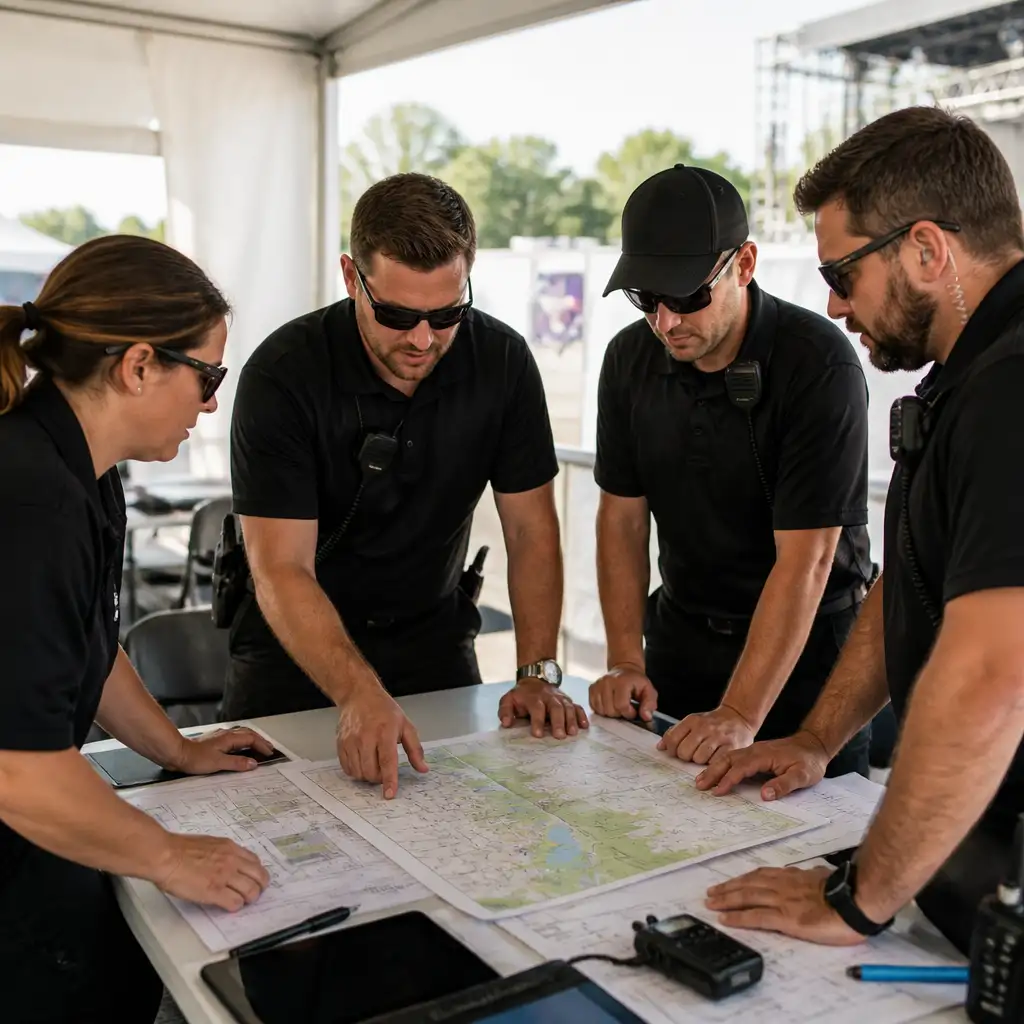
Large outdoor festivals bring unique operational demands: high densities of attendees, temporary infrastructure, and fast-changing environmental conditions. Severe weather—storms, high winds, flash floods, extreme heat or sudden temperature drops—can transform a routine event into a complex public-safety challenge within minutes. For festival organisers, insufficient preparation creates organisational risk, operational disruption, and increased liability exposure.
This guide focuses on practical, operational crowd management measures festival organisers can adopt to improve emergency preparedness and protect attendees. It emphasises contingency planning that integrates dynamic evacuation routes, clear communication protocols, robust staffing models, access-control adjustments, and structured coordination with emergency services. The recommendations are framed so event directors, venue operators and security leads can apply them directly to operational plans and contracts.
While the guidance applies across event sizes, it is particularly relevant for multi-stage festivals, camper-attendance events and any public gathering where weather can degrade venue egress or infrastructure resilience. Integrating these measures into your event security services and risk assessments before tickets go on sale is an effective way to reduce incidents and demonstrate due diligence to stakeholders and insurers.
- Estimated audience: festival organisers, venue operators, event security teams.
- Primary focus: practical steps to manage crowds safely during severe weather.
For organisers seeking specialist support, The Hemingway Group provides event security services and practical crowd-management planning tailored to festivals and public gatherings. Consider early engagement with professional partners when building severe-weather contingency plans.
Table of contents
- Introduction
- Assessing Severe Weather Risks and Integrating Them into Risk Assessments
- Designing Dynamic Evacuation Routes and Venue Circulation Plans
- Communication Protocols and Multi-Channel Alerts for Fast-Moving Weather
- Staffing Models, Roles and a Staffing Calculator Approach
- Access-Control Adjustments, Ingress/Egress Management and Staging Areas
- Coordinating with Emergency Services and Local Authorities
- Frequently Asked Questions
Assessing Severe Weather Risks and Integrating Them into Risk Assessments
Start with a site-specific evaluation of weather vulnerabilities. A thorough assessment identifies likely hazards (wind, lightning, flooding, heat), probable impacts on infrastructure (stages, temporary structures, barriers), and human factors (population density, mobility limitations, camping areas). These findings should be integrated into your overall risk assessments to ensure planning decisions are evidence-based.
Use historical meteorological data, venue topography and drainage maps, and local building-code limits for temporary structures when characterising threats. Map high-risk zones where standing water, slope failure or wind exposure might concentrate danger. Consider special populations—families with young children, older attendees and people with disabilities—when gauging evacuation needs and timelines.
Deliverable: a concise Severe Weather Annex to your event risk assessment that lists threat scenarios, trigger thresholds (e.g., sustained wind speed, lightning within a specified radius, flood warnings), impact areas and initial mitigations. Integrate this annex into contract language with contractors and stage-builders to ensure shared responsibility.
Designing Dynamic Evacuation Routes and Venue Circulation Plans
Evacuation planning for severe weather must be flexible. Fixed exit plans that assume one primary route can fail when wind or water blocks access. Instead, design a layered circulation model with primary, secondary and tertiary egress corridors. Each corridor should be assessed for capacity, gradient, shelter availability and resilience to the specific weather threats you identified.
- Capacity planning: estimate people-per-minute flow for each route based on width, surface footing and likely obstructions.
- Redundancy: ensure no single point of failure—temporary bridges, narrow gateways or single-span access roads—controls egress for large sectors.
- Shelter-in-place options: where evacuation carries greater risk (lightning or flash flooding), pre-designated robust shelters with safe occupancy limits can be safer than moving large crowds across exposed terrain.
Operationalise dynamic routeing with clear, visible signage and pre-briefed marshals positioned to open and close corridors as conditions change. Use temporary barriers and crowd-control fencing to funnel movement and prevent counter-flow. Include route-change triggers in the weather annex so decisions are consistent and defensible.
Communication Protocols and Multi-Channel Alerts for Fast-Moving Weather
Effective communication is central to crowd management during severe weather. A layered communications strategy reduces confusion and increases compliance. Build protocols that combine public-address announcements, visual signage, SMS or app-based alerts, social media updates and in-person marshal guidance.
Key elements of a robust protocol:
- Pre-scripted messages for common scenarios with clear, action-oriented language (e.g., “Proceed calmly to Shelter Zone A; follow stewards”).
- Defined escalation steps and authority to trigger public instructions—who can issue an evacuation order and under what conditions.
- Fallback channels if primary systems fail—handheld megaphones, flag signals and pre-positioned laminated instruction cards for marshals.
Test messages during staff briefings and include templates in your emergency plan so that when weather deteriorates, staff at all levels know the exact wording and sequence for communicating to crowds. Employ geofenced alerts or opt-in SMS to rapidly reach ticket-holders with location-specific instructions.
Staffing Models, Roles and a Staffing Calculator Approach
Staffing is a core control for crowd management. Your model should specify roles (crowd managers, marshal supervisors, communications officers, medical teams), minimum staffing ratios by zone, and surge plans to scale up personnel quickly. Use a simple staffing calculator during planning: estimate peak attendance per zone, desired steward-to-attendee ratio, and required supervisory layers.
Example staffing calculator approach:
| Zone | Peak Attendees | Desired Ratio | Required Stewards |
|---|---|---|---|
| Main Stage | 15,000 | 1:250 | 60 |
| Camping Area | 5,000 | 1:500 | 10 |
Include defined surge roles: an identifiable rapid-response team that can be redeployed to high-need areas, and a runner network to relay real-time site intelligence back to operations. Pair less-experienced stewards with experienced supervisors to improve decision-making during incidents. For capability gaps, plan on augmenting staff with vetted contractors and volunteers trained to your standards.
Invest in certified security training for stewards and supervisors so all personnel understand crowd dynamics, weather-specific risks and safe evacuation techniques.
Access-Control Adjustments, Ingress/Egress Management and Staging Areas
Severe weather may necessitate temporary adjustments to access control to maintain safety. That can include changing entry points, suspending ticket scanning at exposed gates to speed movement, or converting entry gates into emergency egress routes. These measures must be pre-authorised and rehearsed to avoid creating security gaps.
Staging areas for evacuation and medical triage should be located on higher ground, out of potential flood paths and away from overhead hazards. Use simple maps and pre-positioned markers to show attendees where to go. Ensure the ingress and egress of emergency vehicles remain clear—reinforce vehicle access routes with ground protection and assign a liaison to manage vehicle flow during evacuations.
Control access changes with an electronic log and a single point of coordination in operations so changes are tracked and reversible once the weather threat passes.
Coordinating with Emergency Services and Local Authorities
Coordination with local fire, ambulance, police and resilience teams is a legal and practical necessity. Engage early—share site plans, severe-weather annexes, communication templates and evacuation routes. Confirm radio channels, call-sign conventions and preferred contact points. Provide a clear requests checklist so local responders can assess resource needs quickly if called.
Create a short coordination checklist for external agencies that includes contact numbers, site access instructions, pre-authorised vehicle routes, and staging locations. Run joint tabletop exercises or simulations so both your team and local responders understand each other’s capabilities and limitations.
When dealing with public-safety partners, document agreements on authority to close or evacuate the site, medical surge capability, and mutual aid arrangements. For assistance arranging collaboration or preparing formal coordination checklists, contact The Hemingway Group to discuss structured exercise design and operational liaison support.
Frequently Asked Questions
Q: How quickly should an evacuation be initiated when severe weather is confirmed?
A: Evacuation timing depends on the hazard and route capacity. Use predefined trigger thresholds in your Severe Weather Annex. For lightning within a specified radius, immediate sheltering is advised; for predicted flood routes, initiate movement early to avoid congested egress.
Q: What is the minimum training stewards should receive for weather-related crowd management?
A: Stewards should receive training in crowd flow principles, sheltering procedures, communication protocols and basic first aid. A short, scenario-based certified programme improves decision-making—consider certified security training for supervisors and key staff.
Q: How can we balance rapid evacuation with preventing panic and injury?
A: Pre-event communication, clear signage, instructive messaging that emphasises calm movement, and visible, trained staff to lead flows reduce panic. Plan redundant routes and shelter options so attendees are not forced into bottlenecks that create panic.
Large gatherings present unique public-safety challenges. The Hemingway Group provides guidance on crowd management, access control, emergency planning, and event preparedness to help organisers reduce risk and improve attendee safety.