
How Operations Managers Can Strengthen Event Security Planning to Reduce Liability After Access-Control Failures at Conferences
Introduction
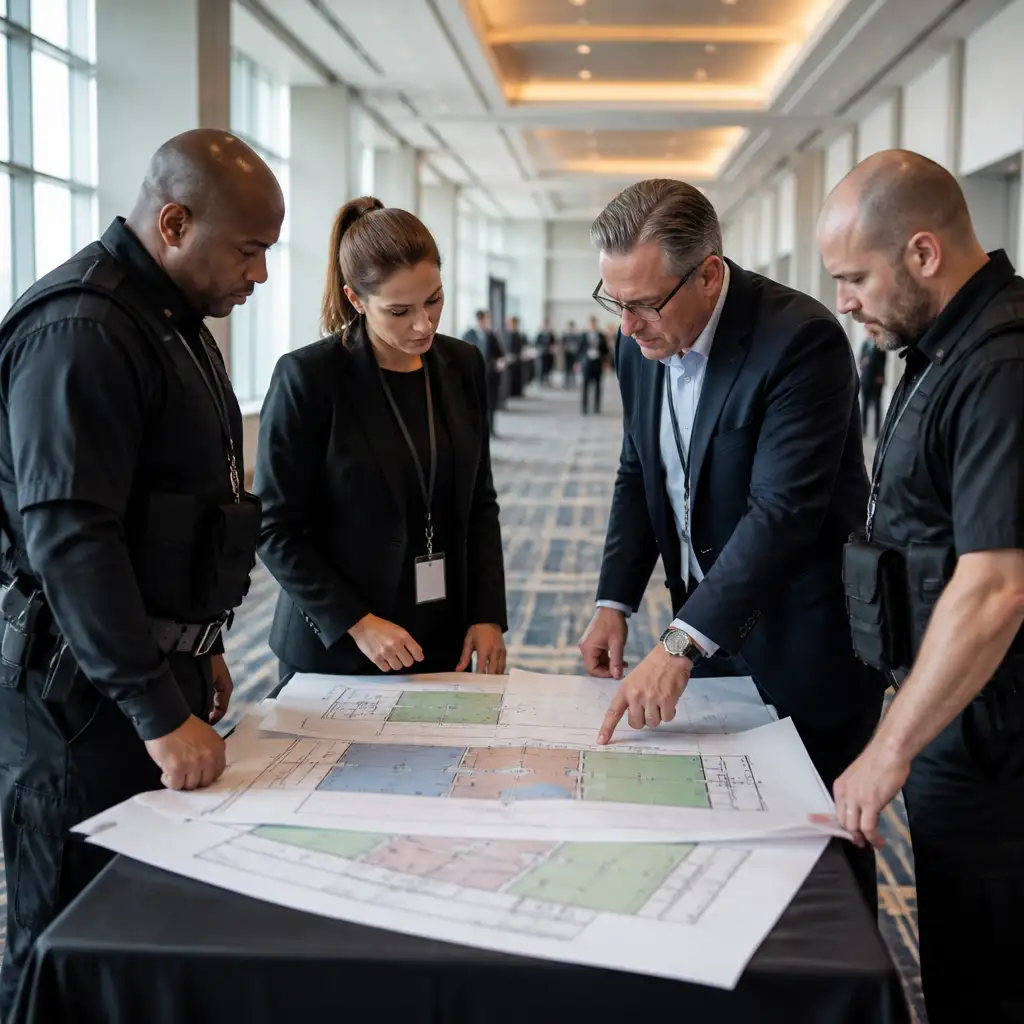
Access-control failures at conferences — tailgating, credential fraud, gate congestion, or communication breakdowns with vendors — raise immediate safety concerns and long-term liability exposure for organizers and venues. For operations managers, these failures are not merely operational headaches; they create legal, reputational, and financial risk for the host organization and partners, and they can endanger attendees, staff, and speakers.
This article explains why robust planning matters, who is affected, and what practical changes operations managers can implement to reduce incident likelihood and limit liability after an access-control failure. It draws on event-security services best practices, crowd-management principles, and preparedness techniques that support decision-makers responsible for large conferences and professional gatherings.
Readers will find an operational playbook covering layered access strategies, vendor coordination, staffing and crowd models, emergency response planning, post-incident risk reduction, and checklists for training and preparedness. The recommendations are designed to be practical, scalable, and focused on preventing access-control failures before they occur while improving response and documentation when incidents do happen.
Layered access-control strategies for conferences
Access control works best when it’s layered: multiple, complementary controls reduce single points of failure. Operations managers should design access as a sequence of verifications and physical barriers rather than relying on a single checkpoint. Layers should be functional, observable, and auditable.
Core layers to consider:
- Pre-event credentialing: secure registration platforms, identity verification for VIPs and staff, and pre-printed secure badges tied to unique identifiers.
- Physical controls: ticket scanners, turnstiles or managed funnels, and staff-verified badges at room and exhibit entrances.
- Behavioral controls: trained staff watching for tailgating, suspicious credentials, and anomalous movement patterns.
- Technology layers: real-time access logs, RFID/badge validation, and linked radios or mass-notification tools for rapid escalation.
Integrating these layers reduces reliance on a single technology or person. Start by aligning access-control design with the event’s risk profile and attendee mix — high-profile or mixed-public conferences require more rigorous layering.
For operations managers seeking specialized guidance, structured services focused on event planning and entrance security can be helpful. Consider engaging event security services to audit layering, test credential systems, and advise on technology integrations before deployment. These assessments create objective records that support operational decisions and help defend against liability claims if failures occur. See event security services for planning resources and expertise.
Coordinating vendors and third-party providers to prevent failures
Vendor and third-party coordination is a common source of access-control breakdowns. Catering crews, AV contractors, exhibitors, and third-party registrars often need controlled access but may not be included in live credential feeds or daily briefings. Establish and enforce a standardized vendor-access protocol.
Key coordination steps:
- Pre-event vendor onboarding that includes identity verification, issued access levels, and a clear chain-of-custody for temporary credentials.
- A single point of contact for vendor access issues and an escalation tree that includes venue security, operations leads, and the event security lead.
- Shared schedules and access matrices so security staff know when and where vendors should be operating and can quickly identify unauthorized presence.
Security consulting partners can facilitate vendor playbooks, contract language, and role definitions that reduce ambiguity. Contractually require vendors to comply with access procedures and include provisions for immediate removal if protocols are violated. Link vendor access enforcement to clearly communicated penalties to ensure compliance and protect attendees.
Integrating vendors into daily security briefings, providing them with limited-time credentials, and confirming vendor lists at shift changes reduces credential misuse and limits tailgating by personnel with legitimate but inappropriate access.
Crowd management and staffing models to limit exposure
Crowd management is an operational discipline that directly affects access control. Proper staffing models ensure checkpoints are staffed consistently, with overlap during shift changes and surge capacity for peak entry times. Understaffing or poorly timed breaks often align with access-control lapses.
Recommended staffing model (illustrative):
| Area | Base Staffing | Peak Surge | Roles |
|---|---|---|---|
| Main Registration | 4 attendants + 1 supervisor | +2 attendants (rush periods) | Badge checks, registration fixes, escalation |
| Exhibit Halls | 2 roving staff per entry | +1 roving per 500 attendees | Tailgating observation, badge verification |
| VIP & Backstage | 1 dedicated screener + 1 escort | Maintain coverage | Credential enforcement, escorting |
Staffing models must include realistic relief plans, clear handovers, and documented procedures for breaks. Cross-train operations staff in simple access-control verifications to provide surge capacity without compromising security standards.
Staffing decisions should be based on expected throughput and venue constraints. Use crowd-management planning to model queues and identify pinch points; run the model against worst-case arrival patterns and staffing rotas. Certified security training for frontline staff improves detection of credential fraud and tailgating behaviors and increases confidence in enforcement actions.
Emergency response planning and drills for access failures
Access-control failures can escalate into incidents that require public-safety or medical response. Integrate access-control contingencies into the event’s emergency response plan so staff know how to secure areas, assist first responders, and preserve evidence.
Plan elements to include:
- Clear incident roles: who secures an area, who documents the scene, who communicates with attendees and media.
- Communication protocols: internal alerts, direct lines to venue security, and how to involve local law enforcement when necessary.
- Evidence and documentation procedures: chain-of-custody for recovered credentials, access logs, CCTV exports, and witness statements.
- Evacuation and shelter-in-place variants that account for compromised access points and alternative egress routes.
Regular drills and tabletop exercises reduce confusion during real incidents. Test scenarios that simulate access-control failures: fake credential breaches, tailgating events, and concurrent vendor misbehavior. Drills should include operations, venue staff, security, and communications teams to validate handoffs and timelines.
Post-incident actions to reduce liability and reputational harm
How an organization responds after an access-control failure has major implications for liability. Prioritize evidence collection, timely internal review, transparent communication, and corrective action. These steps demonstrate due diligence and a commitment to continuous improvement.
Immediate post-incident checklist:
- Secure and preserve physical and digital evidence (badges, access logs, CCTV recordings).
- Document timeline and witness statements within 24 hours.
- Notify legal and risk teams and inform contracted insurers if required.
- Brief executive leadership with clear facts and known unknowns.
Follow-up actions should include a formal incident review and a root-cause analysis that identifies process, staffing, technology, or training gaps. From there, implement corrective actions with deadlines and assigned owners. Use structured risk assessments to measure residual exposure and support any necessary policy, technology, or staffing changes. Consider engaging professional risk assessments to create defensible remediation plans and to document the steps taken to reduce future liability.
Checklists and training recommendations for operations managers
Operations managers benefit from concise, usable checklists that can be applied during planning, execution, and post-incident reviews. Below are recommended checklists and training priorities to institutionalize access-control resilience.
Access-control pre-event checklist
- Verify credential issuance process and anti-fraud features.
- Confirm badge printing and tamper-resistant materials.
- Test scanners and access readers across entry points.
- Confirm staffing rosters with relief coverage and surge plans.
- Run a walkthrough with security, operations, and vendor leads.
- Publish and distribute the access-control escalation tree.
Staffing and crowd-management checklist
- Confirm staffing model and assign supervisors to each entry.
- Provide radios and backup power for critical devices.
- Establish queue-management fixtures to prevent tailgating.
- Schedule briefings at shift changes to ensure handoff clarity.
Preparedness training recommendations
- Deliver scenario-based sessions on credential fraud and tailgating detection.
- Include role-play for difficult conversations with non-compliant attendees and vendors.
- Train staff on evidence preservation and witness interviewing basics.
- Schedule periodic drills with venue security, and include local first responders when appropriate.
- Invest in certified security training for supervisors and team leads to strengthen judgment under pressure.
Operations managers should also maintain an updated contact and escalation list. If internal resources are limited, coordinate with external security consulting partners who can provide on-site oversight, training, and operational playbooks that align with event scale and complexity. For consultations, consider security consulting services that specialize in event operations and credentialing controls.
Frequently Asked Questions
Q: What immediate steps should I take if a credentialing failure allows unauthorized attendees into a conference area?
A: Secure the affected area, document the incident (time, location, individuals involved), preserve access logs and CCTV, notify venue security and your legal/risk teams, and begin a witness interview process. Limit further access until verification of credentials is completed and consider a targeted sweep for additional unauthorized individuals.
Q: How can operations managers balance attendee experience with strict access controls?
A: Design controls that are efficient and visible but not intrusive. Use technology for rapid credential checks, clear signage, and well-trained staff who enforce rules professionally. Communicate access expectations to attendees before arrival and provide staffed fast lanes for pre-verified delegates to reduce friction.
Q: When should I engage external event security specialists or risk assessors?
A: Engage external specialists when your event includes high-profile attendees, complex vendor mixes, mixed public and private access, or when internal experience is limited. External risk assessments and consulting provide independent validation of plans and create defensible documentation that can reduce liability after an incident. Consider scheduling an assessment during planning and again after a post-incident review.
Successful events require careful security planning long before attendees arrive. The Hemingway Group helps event organizers develop effective security strategies, crowd-management plans, and emergency response procedures designed to support safe and successful events.